
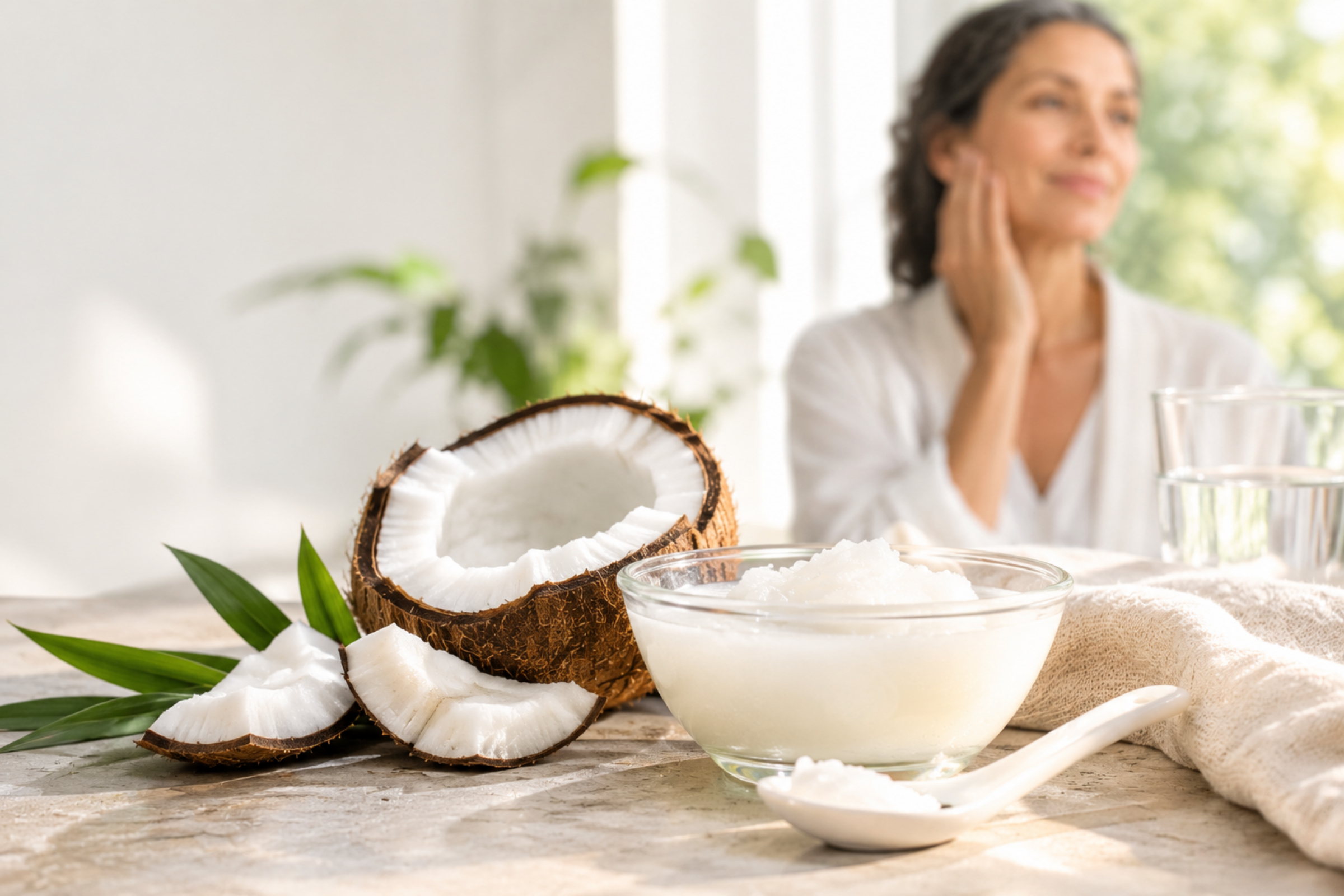
How to Use Coconut Oil for Softer, Healthier-Looking Skin in 2 Weeks
Coconut oil has been used in skincare routines for years because it is rich in fatty acids and has moisturizing properties. When applied appropriately, it can help reduce dryness and leave the skin feeling softer and smoother.
But there is an important distinction between improving the appearance and feel of dry skin and actually reversing aging. No home remedy can reliably make someone look 10 years younger in just two weeks.
Still, if your skin looks dry, rough, or dull, adding a simple coconut-oil routine may help improve its overall appearance and moisture level.
Why Coconut Oil Is Popular in Skincare
Coconut oil contains a high proportion of saturated fatty acids, including lauric acid. Its occlusive properties can help reduce moisture loss from the skin.
This makes it particularly interesting for people dealing with dry skin.
When the skin is adequately moisturized, it can temporarily appear:
- Softer
- Smoother
- More supple
- Less flaky
- More comfortable
However, coconut oil is primarily a moisturizer. It should not be considered a proven treatment for wrinkles, sagging skin, dark spots, or other signs of aging.
What Coconut Oil May Do for Your Skin
1. Helps Reduce Dryness
Dry skin can make fine lines and rough texture appear more noticeable.
Applying a small amount of coconut oil to slightly damp skin may help seal in moisture and reduce the feeling of dryness.
2. Can Make Skin Feel Smoother
Because coconut oil forms a layer over the skin, it can temporarily improve the feel and appearance of rough areas.
This is especially useful on areas such as the hands, elbows, knees, and legs.
3. Supports the Skin Barrier
The outer layer of your skin acts as a protective barrier. Excessive washing, harsh cleansers, cold weather, and dry air can contribute to dryness and irritation.
A suitable moisturizer can help support this barrier, and coconut oil may work well for some people as an occlusive moisturizer.
4. Gives Skin a Healthy-Looking Glow
Well-moisturized skin can reflect light differently, which may make it look smoother and more radiant.
This is one reason moisturizing products can create a noticeable cosmetic improvement without actually changing the underlying structure of the skin.
How to Use Coconut Oil for Two Weeks
If your skin tolerates coconut oil well, you can try a simple routine for two weeks.
Step 1: Cleanse Gently
Wash your face with a gentle cleanser and lukewarm water.
Avoid excessively hot water and harsh scrubbing, which can increase dryness and irritation.
Step 2: Leave the Skin Slightly Damp
After washing, gently pat your face with a clean towel.
Do not completely dry the skin if you plan to apply a moisturizer immediately afterward.
Step 3: Use a Very Small Amount
Take a tiny amount of coconut oil and warm it between clean fingertips.
A little goes a long way.
Gently spread a thin layer over areas that tend to become dry.
Avoid getting the oil into your eyes.
Step 4: Use It at Night
For many people, nighttime is the most convenient time to use an oil because it can feel heavy or greasy during the day.
Apply a thin layer after cleansing and allow it to remain on the skin overnight if your skin tolerates it.
Step 5: Protect Your Skin During the Day
Coconut oil does not replace sunscreen.
During the daytime, use a broad-spectrum sunscreen with an appropriate SPF, especially when spending time outdoors.
Sun protection is one of the most important parts of any long-term skincare routine.
What Results Can You Expect After Two Weeks?
It is reasonable to expect improvements in skin hydration and softness if dryness was the main problem.
Your skin may feel:
- Less dry
- Smoother
- Softer
- More comfortable
- More moisturized
However, two weeks is not enough to realistically promise that coconut oil will erase wrinkles or make someone look 10 years younger.
Visible changes in wrinkles, pigmentation, and other signs of skin aging generally require a consistent skincare routine over a much longer period.
Coconut Oil Is Not Right for Every Face
Although coconut oil can be useful for dry skin, it may not work well for everyone.
For some people, especially those with oily or acne-prone skin, coconut oil may feel too heavy and may contribute to clogged pores or breakouts.
If you frequently experience facial breakouts, consider using a moisturizer specifically formulated for your skin type instead.
Always Do a Patch Test
Before applying coconut oil widely to your face, test a small amount on a limited area of skin.
Wait to see how your skin responds.
If you develop redness, itching, burning, swelling, or irritation, stop using it and wash the area gently.
If you have a history of significant skin reactions or a persistent skin condition, consider speaking with a dermatologist before introducing a new skincare ingredient.
What to Combine With Coconut Oil for Better Skin?
Coconut oil alone is unlikely to dramatically change the appearance of aging skin.
A more complete skincare routine can include:
Gentle Cleansing
Choose a cleanser that removes dirt and makeup without leaving your skin excessively dry or tight.
Regular Moisturizing
Use a moisturizer suited to your skin type to help maintain hydration.
Daily Sun Protection
UV exposure is one of the major environmental factors associated with premature skin aging. Consistent sun protection can help protect the skin over time.
Adequate Sleep
Poor sleep can affect how rested and healthy your skin appears.
Balanced Nutrition
A varied diet containing fruits, vegetables, protein sources, whole grains, and healthy fats provides nutrients that support overall health.
Avoiding Smoking
Smoking can negatively affect skin health and contribute to premature skin aging.
Common Mistakes to Avoid
Using Too Much Coconut Oil
More is not necessarily better.
A thick layer can feel greasy and may be uncomfortable, particularly on the face.
Applying It to Irritated Skin
If your skin is already red, damaged, or irritated, adding a new product may make the problem worse.
Expecting Dramatic Anti-Aging Results
Coconut oil can moisturize the skin, but it should not be presented as a miracle anti-aging treatment.
Skipping Sunscreen
Using an oil at night does not protect your skin from UV exposure during the day.
Frequently Asked Questions
Can coconut oil make you look younger?
Coconut oil can make dry skin look temporarily smoother and more hydrated, which may create a healthier-looking appearance. There is not good evidence that it can make someone look 10 years younger.
Can I use coconut oil on my face every night?
Some people with dry skin may tolerate it well, while others may experience clogged pores or breakouts. Start with a small amount and stop if irritation or breakouts develop.
How long does coconut oil take to moisturize skin?
The moisturizing effect can be noticeable relatively quickly, particularly when dryness is the main concern. Longer-term improvements depend on your overall skincare routine and individual skin type.
Is coconut oil a replacement for sunscreen?
No. Coconut oil should not be used as a substitute for sunscreen.
Can coconut oil remove wrinkles?
Coconut oil can temporarily make dry skin look smoother by improving hydration, but it has not been established as a treatment that removes wrinkles.
Final Thoughts
Coconut oil can be a simple and inexpensive option for people with dry skin who want to improve softness and hydration.
However, the claim that coconut oil can make you look 10 years younger in two weeks is an exaggeration. A more realistic expectation is that consistent moisturizing may make dry skin look and feel smoother.
For long-term skin health, focus on a complete routine that includes gentle cleansing, appropriate moisturizing, daily sun protection, healthy lifestyle habits, and products suited to your individual skin type.
Beauty & Skincare Disclaimer: This article is provided for general educational purposes only and is not intended to diagnose, treat, cure, or prevent any medical or skin condition. Individual skin types can respond differently to skincare ingredients. If you experience persistent irritation, severe acne, an unexplained skin change, or another concerning symptom, consult a qualified dermatologist or healthcare professional.